Table of contents
Choosing a payment provider
5
Min. reading time

How much does a POS system cost in Switzerland? The comprehensive 2026 cost comparison including money-saving tips

Find out what a POS system in Switzerland really costs and how you can save money in the long run with a modern solution.

How much does a POS system cost in Switzerland? The comprehensive 2026 price comparison, including money-saving tips

Anyone looking for a new POS system will sooner or later ask themselves the same question: What does a POS system in Switzerland actually cost?

The answer is less straightforward than many think. Beyond the initial purchase price, software subscriptions, payment processing fees, add-on modules, and ongoing costs all play a significant role. What looks affordable at first glance can quickly turn into a costly solution in day-to-day operations.

In this article, we show you the costs associated with a modern POS system, what you should look for when comparing options, and why it pays to take a close look at the total package.

What costs are involved with a POS system?

Today, a POS system is about much more than just a cash register. Modern solutions combine POS software, card payments, TWINT, analytics, digital receipts, and even QR code ordering.

Depending on the provider, the following costs may apply:

  • Hardware purchase
  • Monthly software fees
  • License fees
  • Costs for additional users
  • Fees for QR code ordering systems
  • Costs for support or updates
  • Payment processing fees for card transactions
  • Separate contracts for online payments

These ongoing costs are often underestimated during the selection process.

Typical pricing examples in Switzerland

Costs vary significantly depending on the provider.

Kostenpunkt Typische Kosten
💻 Hardware CHF 300.– bis CHF 2'500.–
📅 Software-Abo CHF 30.– bis CHF 250.– / Monat
📲 QR-Code Bestellsystem CHF 20.– bis CHF 150.– / Monat
👥 Zusätzliche Benutzer Häufig kostenpflichtig
🛠 Support Teilweise kostenpflichtig
💳 Payment Je nach Anbieter unterschiedlich

If you need several additional modules, you can quickly end up paying several hundred francs per month.

Payyap Prime Sparrechner

Wie viel kannst du mit Payyap Prime sparen?

Berechne in wenigen Sekunden, ob sich Payyap Prime für dein Unternehmen lohnt und wie viel du jährlich sparen könntest.

CHF
CHF 1'000 Break-even: ca. CHF 8'300 CHF 50'000

Geschätzte Ersparnis / Monat
CHF 0
Geschätzte Ersparnis / Jahr
CHF 0

Jetzt kostenlos testen
Die Berechnung dient als Orientierung. Die tatsächliche Ersparnis hängt von den individuellen Transaktionsgebühren und dem Zahlungsverhalten ab.

Welche Lösung passt zu deinem Unternehmen?

Zur Orientierung findest du hier vier typische Beispiele aus der Praxis. Je nach monatlichem Karten- und TWINT-Umsatz kann sich entweder Payyap Standard oder Payyap Prime besser eignen.

Bar

Monatlicher Karten- & TWINT-Umsatz

CHF 7'500
✅ Empfehlung
Payyap Standard

Ideal für Betriebe mit kleinerem Zahlungsvolumen, die alle Funktionen ohne monatliche Softwarekosten mit Payyap Standard nutzen möchten.

Restaurant

Monatlicher Karten- & TWINT-Umsatz

CHF 18'000
⭐ Empfehlung
Payyap Prime

Mit Payyap Prime können sich die attraktiven Transaktionskonditionen bei höherem Zahlungsvolumen besonders schnell auszahlen.

Coiffeur

Monatlicher Karten- & TWINT-Umsatz

CHF 6'000
✅ Empfehlung
Payyap Standard

Für kleinere Unternehmen bietet Payyap Standard alle wichtigen Funktionen – ganz ohne monatliche Softwarekosten.

Bioladen

Monatlicher Karten- & TWINT-Umsatz

CHF 12'500
⭐ Empfehlung
Payyap Prime

Mit Payyap Prime profitierst du bei steigendem Zahlungsvolumen von attraktiven Transaktionskonditionen.

💡 Gut zu wissen

Diese Beispiele dienen als Orientierung. Nutze den Sparrechner oben und finde heraus, ob Payyap Standard oder Payyap Prime besser zu deinem Unternehmen passt.

Why the lowest price isn't always the most cost-effective solution

Many businesses only compare the price of the hardware or the monthly software subscription.

However, the actual costs often arise later on.

A typical example:

A restaurant chooses an inexpensive POS system. After a few months, additional requirements emerge:

  • Integrating TWINT
  • Offering QR code ordering
  • Adding more employees
  • Enabling online payments
  • Connecting additional devices

Suddenly, further licensing fees or additional costs apply.

That is why it is always worth looking at the total costs over several years – rather than just the entry price.

Tipp für Unternehmen mit höherem Zahlungsvolumen

Payyap Standard eignet sich ideal für Unternehmen, die ein modernes Kassensystem ohne monatliche Softwarekosten nutzen möchten.

Nimmst du jedoch regelmässig viele Kartenzahlungen oder TWINT-Zahlungen entgegen, kann sich Payyap Prime lohnen. Für CHF 19.– pro Monat und Gerät profitierst du von reduzierten Transaktionsgebühren. Bereits ab einem monatlichen Zahlungsvolumen von rund CHF 8'300 kann sich die Prime-Lizenz finanziell auszahlen.

Ein weiterer Vorteil: Bestehende Worldline-Kunden können ihren aktuellen Worldline-Vertrag übernehmen oder – je nach Situation – von attraktiveren Konditionen profitieren. So bleibt dein Kassensystem flexibel und wächst mit deinem Unternehmen mit.

Practical example

A café starts with an inexpensive POS system for CHF 39.– per month.

After a short time, additional functions are required:

The initial CHF 39 quickly adds up to over CHF 100 per month.

Over three years, that already amounts to several thousand francs.

What should you look out for when comparing costs?

Not every POS system offers the same range of functions.

Before choosing a POS system, it is worth considering the following points:

  • Gibt es monatliche Softwarekosten?
  • Sind Updates und neue Funktionen bereits inklusive?
  • Ist TWINT bereits integriert?
  • Werden Kartenzahlungen direkt unterstützt?
  • Fallen zusätzliche Lizenzkosten an?
  • Ist ein QR-Code Bestellsystem bereits enthalten?
  • Benötigst du mehrere Verträge oder nur einen zentralen Ansprechpartner?

The more transparent the cost structure, the easier it is to plan for the long term.

Traditional POS systems vs. modern all-in-one solutions

Funktion Viele Kassensysteme Payyap
Monatliche Softwarekosten ❌ Oft vorhanden ✅ Keine Softwarekosten
Kassensoftware ➖ Teilweise kostenpflichtig ✅ Inklusive
TWINT ➖ Je nach Anbieter ✅ Direkt integriert
Kartenzahlungen ➖ Je nach Anbieter ✅ Direkt integriert
QR-Code Bestellsystem ❌ Zusatzkosten ✅ Bereits inklusive
Payment ❌ Separater Vertrag ✅ Eine Lösung
Updates ➖ Teilweise kostenpflichtig ✅ Inklusive
Verwaltung ❌ Mehrere Systeme ✅ Alles in einer Plattform

Note: The prices mentioned serve as a guide and may vary depending on the provider, range of functions, and contract model. The decisive factor is not just the initial purchase price, but the total cost over the entire service life.

💡

Gut zu wissen

Bei Payyap fallen keine monatlichen Softwarekosten an. Das Kassensystem ist bereits über die Standard-Paymentkonditionen nutzbar – ganz ohne zusätzliche Software-Abonnements.

Funktionen wie Kassieren, TWINT, Kartenzahlungen, Berichte und das integrierte QR-Code Bestellsystem sind bereits enthalten und stehen ohne zusätzliche Lizenzkosten zur Verfügung. So profitierst du von einer transparenten Kostenstruktur und einer modernen Komplettlösung, die mit deinem Unternehmen mitwächst.

Why integrated solutions are more cost-effective in the long run

A modern all-in-one solution not only saves money but also reduces administrative effort.

Instead of managing multiple providers, different contracts, and various systems, all processes run through a single platform.

This offers several advantages:

  • less administrative effort
  • transparent costs
  • no double licensing fees
  • centralized management
  • faster implementation
  • a single point of contact

This is often the more economical solution, especially for small and medium-sized businesses.

Which businesses benefit from a modern POS system?

A transparent POS system is suitable for numerous industries:

  • Restaurants
  • Cafés
  • Bars
  • Food trucks
  • Pool kiosks
  • Bakeries
  • Retail
  • Farm shops
  • Pop-up stores
  • Event businesses

Regardless of the industry, the rule is: the simpler the solution is designed, the easier it is to use in everyday operations.

Conclusion: Don't just compare the price – compare the total costs

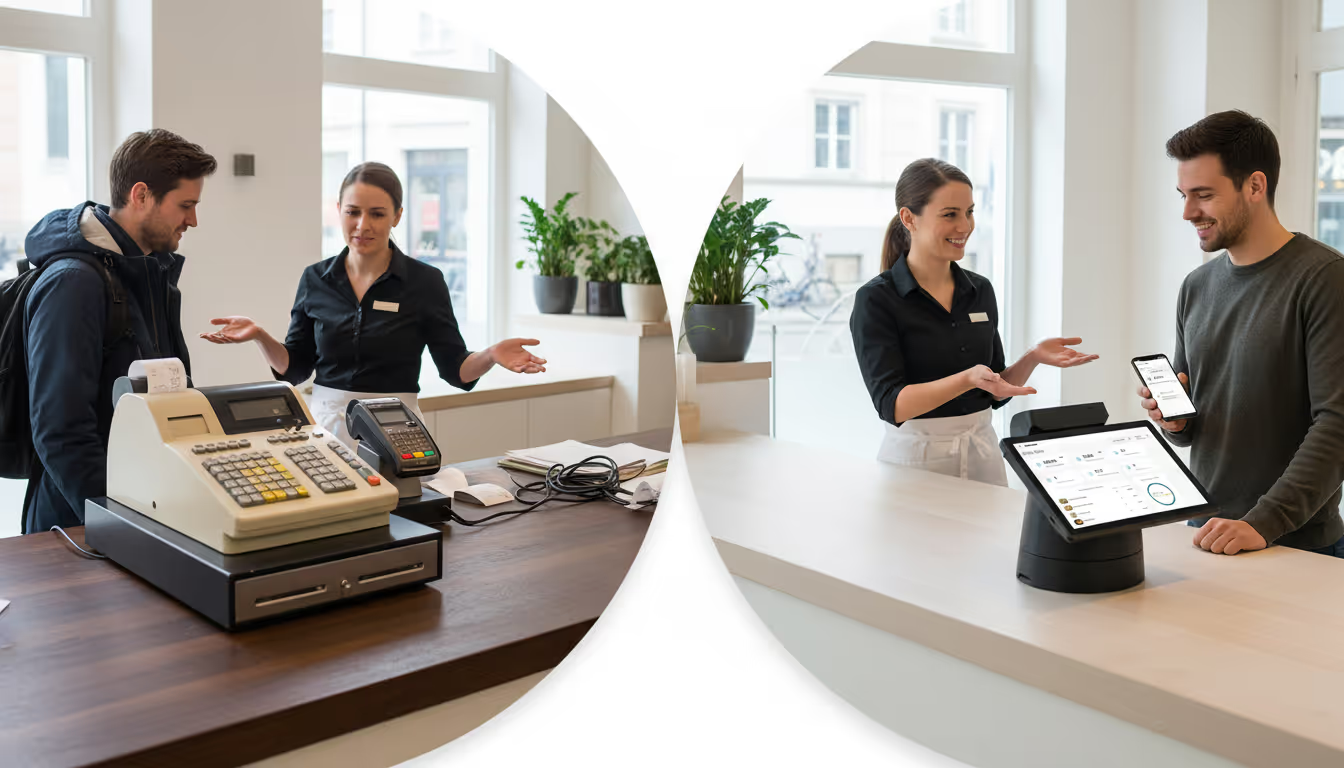
An inexpensive POS system is not automatically the most economical solution. The decisive factor is the total cost over several years. Therefore, pay attention not only to the purchase price, but also to software fees, payment processing, additional modules, and daily effort.

With Payyap Standard you get a modern POS system with no monthly software fees. If your business grows or your card transaction volume increases, Payyap Prime may be even more worthwhile thanks to its attractive transaction rates. This allows you to choose the solution that best fits your business – both today and in the future.

Häufig gestellte Fragen zum Thema

How much does a POS system cost in Switzerland?

Costs vary depending on the provider and the range of features. In addition to hardware, there are often monthly software fees, license costs, and payment processing fees. That is why you should always compare the total costs.

Are there POS systems with no monthly software fees?

Yes. There are modern solutions like Payyap that do not charge monthly software fees. The POS system can be used through standard payment terms.

What are the ongoing costs for a POS system?

Typical ongoing costs include software subscriptions, licensing fees, add-on modules, support, and fees for payment or QR code ordering systems.

Is a QR code ordering system included in the price?

That depends on the provider. Many charge an additional subscription fee for it. With Payyap, the QR code ordering system is already integrated.

What is most important when comparing POS systems?

The purchase price isn't the only deciding factor. Pay attention to software costs, integrated features, payment processing, scalability, and potential hidden fees.

Which businesses can benefit from a modern POS system?

Modern POS systems are ideal for restaurants, cafés, food trucks, pool kiosks, retail stores, farm shops, event venues, and many other businesses looking to digitize their operations efficiently.

How much does a POS system cost for a small business?

Costs depend on the provider and the range of features. While many solutions charge monthly software fees, there are also POS systems like Payyap Standard that can be used without any monthly software costs. The total cost, including hardware, payment processing, and any additional features, is always the deciding factor.

Are there POS systems with no monthly fees?

Yes. Some modern POS systems do not charge monthly software fees. Instead, usage is covered through payment processing. This allows businesses to use all essential features without having to pay additional licensing costs.

What hidden costs can arise with a POS system?

In addition to the hardware, there may be extra costs for software licenses, updates, support, QR ordering systems, user accounts, or integrations. That is why it is worth comparing the total costs carefully.

Is a POS system with integrated payment worth it?

Yes. When your POS system and card payment terminal work together directly, processes become simpler and errors are reduced. Plus, you usually need less hardware and have only one point of contact.

How much does a POS system including TWINT cost?

That depends on the provider. It is important that TWINT is already integrated and that no additional interface or separate contract is required.

Can I continue using my existing card contract?

For some POS systems, yes. For example, Payyap Prime allows you to use an existing Worldline contract or switch to more attractive terms.

More articles

View all articles
News
Latest News
payyap Insights – The future of your business analytics
With payyap Insights, you can turn sales data into valuable insights—directly within payyap, free of charge and intuitively.
Artikel lesen
Latest News
Update News July 2026
The July update brings numerous new features, optimizations, and bug fixes to Payyap—for faster workflows, greater convenience, and an even more stable POS solution.
Artikel lesen
Choosing a payment provider
Trends
Latest News
QR code ordering system for pools – More time for swimming, less time in line
Discover how a QR code ordering system can take the pressure off your pool kiosk, reduce wait times, and improve the guest experience.
Artikel lesen
Choosing a payment provider
Trends
The Best Restaurant POS Systems in Switzerland 2026
Choosing the right POS system is crucial. Learn which features modern restaurants need and what you should look for when making your selection.
Artikel lesen
Trends
Choosing a payment provider
News
Rental Tills / Event Tills
Latest News
Restaurant ordering system: More revenue, less stress
Payyap ordering system: Scan the QR code (no extra app required), place your order via smartphone, and pay instantly!
Artikel lesen
Choosing a payment provider
Trends
The modern point-of-sale system is more than just a device
Modern POS systems combine sales and payment into a single digital solution—efficient, fast, and clear.
Artikel lesen
Rental Tills / Event Tills
Why rental units are essential today
With Payyap's event cash register, you can process payments at events quickly, cashless and without an additional terminal — simply rent and get started right away.
Artikel lesen
Trends
Rental Tills / Event Tills
Choosing a payment provider
Tap on Mobile: Checkout has never been easier
With Tap on Mobile or Tap to Pay, any Android device becomes a point-of-sale system and payment terminal for contactless payments.
Artikel lesen